
Article
How much magnesium and iron in cocoa powder? What the Swiss data says
Which food is highest in magnesium? In the Swiss food composition database published by the FSVO, the answer is not pumpkin seeds, the usual winner of English-language lists, but deoiled, unsweetened cocoa powder, which also heads the iron ranking. Its 600 mg of magnesium per 100 g look striking until you weigh what a spoonful actually delivers. Here is how to read that number, and what it leaves out.
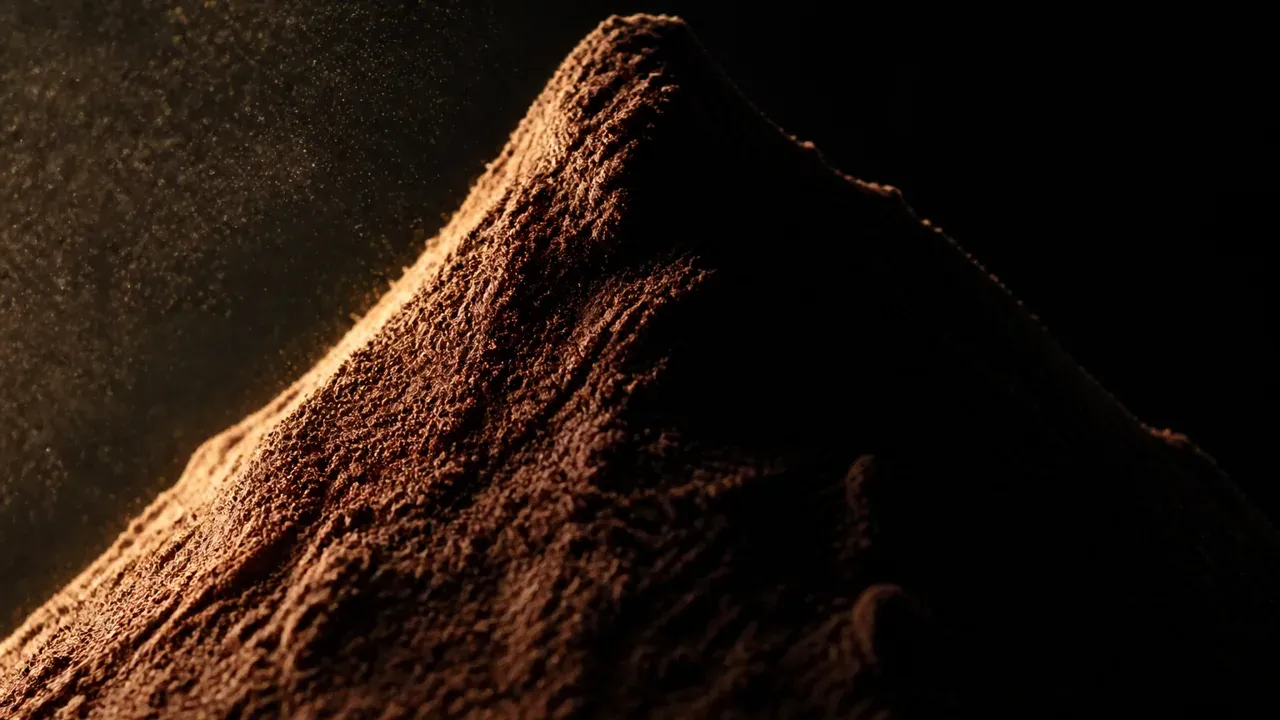
The food highest in magnesium is not pumpkin seeds
English-language lists of foods high in magnesium almost always open with pumpkin seeds. In the Swiss FSVO database, two mineral rankings, one for magnesium and one for iron, open with the same product instead: deoiled, unsweetened cocoa powder, filed under sweets in the chocolate and cocoa products subcategory. Its record lists 600 mg of magnesium and 51 mg of iron per 100 g.
Behind it, the order barely moves. Pumpkin seeds follow with 520 mg of magnesium, and unsweetened cocoa powder closes the top three at 500 mg. On the iron side, that same unsweetened cocoa holds second place with 49 mg.
Deoiled, unsweetened, raw cacao: naming the right product
Deoiled cocoa, sometimes sold as reduced-fat cocoa powder, has had part of its cocoa butter pressed out. Weight for weight, everything that remains, minerals included, makes up a larger share of the total: that is why the FSVO database treats it as a separate food from unsweetened cocoa powder, 600 mg of magnesium on one side, 500 mg on the other.
English-language sources add labels of their own, natural versus Dutch-processed cocoa, or raw cacao versus roasted cocoa, and quote figures that differ from one site to the next. The Swiss records identify a product by what is in it, fat and sugar, not by a marketing term, which is one reason the numbers here do not match every table found online. Chocolate bars, blends of powder, sugar and cocoa butter, are separate entries again. The database methodology explains how these designations are built.
600 mg per 100 g, but what does a spoonful deliver?
A value per 100 g describes a density, not a serving, and nobody spoons 100 g of cocoa powder into a mug. Set against the reference values used on Swiss food labels, those 100 g would amount to 160% of the magnesium reference (375 mg) and 364% of the iron reference (14 mg): no everyday use comes near that quantity.
At 10 g of powder, roughly one well-filled teaspoon, the picture changes entirely: 60 mg of magnesium, or 16% of the 375 mg reference, and 5.1 mg of iron, or 36% of the 14 mg. American sites compute their percentages against the US Daily Value rather than the Swiss label references used here, so the percentages differ across sources. The portion calculator runs that arithmetic for any quantity, in grams or in tablespoons.
A content ranking is not an absorption ranking
A per-100 g ranking rests on a content measured in a laboratory. It says nothing about how much of that iron or magnesium actually crosses the intestinal wall. The iron in cocoa is non-heme iron, the plant form whose absorption depends heavily on the rest of the meal, and nutritional analyses describe compounds in cocoa, tannins, phytates and oxalates, associated with lower absorption.
The second blind spot is the form in which the product is used. The record describes a plain powder, neither diluted nor sweetened nor blended: a mug of hot chocolate or a chocolate cake no longer shares its composition. The comparison tool puts two records side by side, rather than relying on a half-remembered figure.
What else sits in the cocoa record
The same record carries values that rarely make the headlines: 4020 mg of potassium, 28.9 g of fibre, 24.8 g of protein and 343 kcal per 100 g. They follow the same reading rule as the magnesium: scaled to 10 g, they divide by ten.
These figures describe a composition, never an individual requirement, which varies with age and personal circumstances; questions about one’s own mineral intake belong with a doctor or a registered dietitian. The rest of the food catalogue reads in exactly the same way.