Article
Zucchetti, Peperoni, Nüsslisalat: Swiss German food words decoded
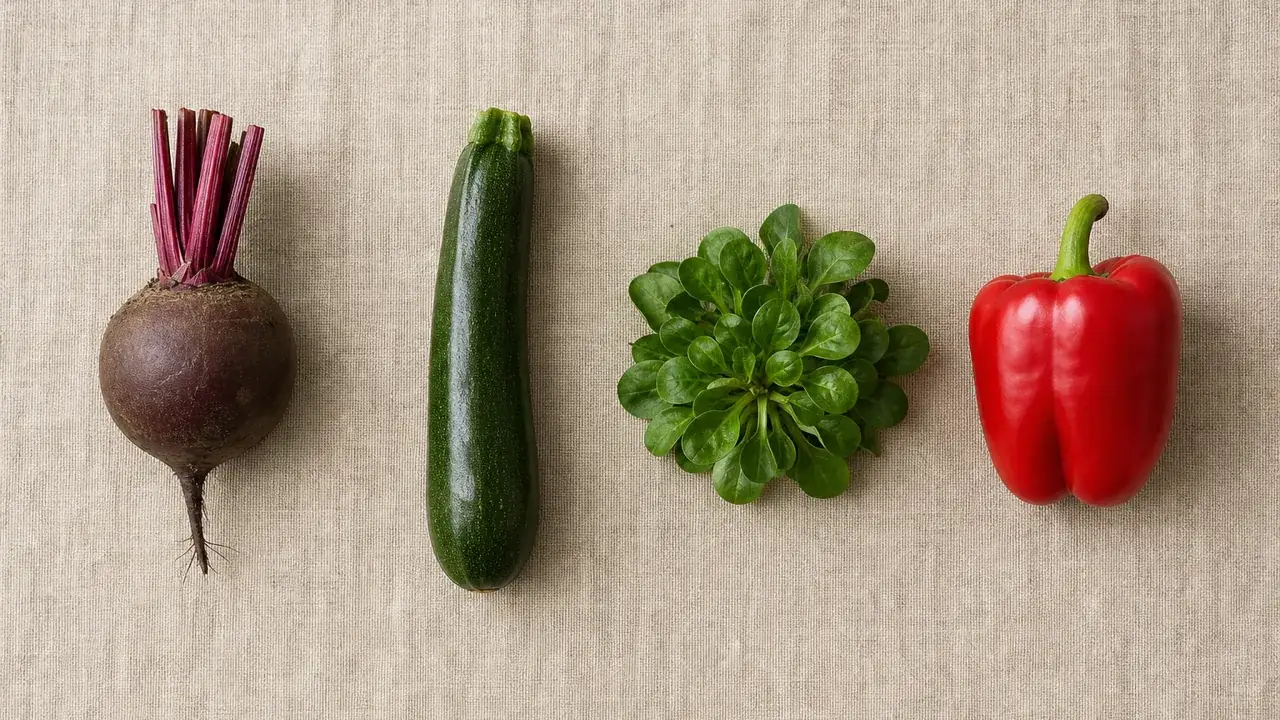
Shopping or cooking in Switzerland comes with its own food vocabulary: beetroot is Rande, zucchini is Zucchetti, lamb’s lettuce is Nüsslisalat, and a Peperoni is a bell pepper, not a pizza salami. The official labels of the Swiss food composition database, published by the FSVO, follow this Swiss usage rather than the dictionaries of Germany or France. This glossary walks through the words that puzzle English speakers most, their equivalents abroad, and the food actually hiding behind each name.
One database, four languages, labels that speak Swiss
The Swiss food composition database, published by the FSVO, describes 1216 foods across 19 families, with one label per national language plus English. One detail matters for anyone who learned their food vocabulary in a Swiss supermarket: the German column is written in the Standard German of Switzerland, not the German of Germany. It reads "Rande, roh" rather than "Rote Bete", "Zucchetti" rather than "Zucchini", "Poulet" rather than "Hähnchen".
For English speakers living in Switzerland, the gap runs both ways: the word on the supermarket shelf is the Swiss one, while the word in most online nutrition tables is the German or the American one. Here, the Swiss name is the official name of the entry, and the complete food list can be browsed in all four languages, English included.
Zucchetti, Nüsslisalat, Rande: three supermarket regulars
Three vegetables account for most of the puzzled looks in the produce aisle, because their Swiss names appear in no dictionary of Germany.
- Zucchetti: the vegetable Americans call zucchini and the British call courgette. Same species, same summer squash, only the ending differs from the German "Zucchini". The Zucchini, raw entry lists 17 kcal per 100 g.
- Nüsslisalat: lamb’s lettuce, also sold in English as corn salad or mâche, "Feldsalat" in Germany and "Vogerlsalat" in Austria. The Swiss name is usually explained by a nutty note in the leaves, an explanation that is widespread but rarely documented. Its entry lists 18 kcal per 100 g.
- Rande: the beetroot, "Rote Bete" in Germany. The word’s origin, often traced back to Middle High German, remains debated; the more careful sources present it with caution. The official entry is titled Beetroot, raw in English: 48 kcal per 100 g.
Peperoni: a vegetable in Switzerland, a salami on a pizza
In English, pepperoni with a double p is a spiced salami, the classic American pizza topping. In Switzerland, "Peperoni" is a vegetable: the large mild bell pepper that Germany calls "Paprika". In Germany and Austria the word flips again, and "Peperoni" means small hot chillies, the ones Switzerland calls "Peperoncini". One word, three countries, three different things on the plate.
In the FSVO database there is no ambiguity: the Swiss German entry "Peperoni, rot, roh" corresponds to Bell pepper, red, raw, with 149 mg of vitamin C per 100 g. The ranking of foods by vitamin C content shows where that figure sits among the other entries. Anyone reading "Peperoni" on a Swiss menu or a Swiss data record can safely picture the vegetable, not the salami.
Chou-pomme: a kohlrabi hiding behind a French name
The traps are not limited to the German column. In Swiss French, kohlrabi is called "chou-pomme", literally "apple cabbage". Despite the name it is neither a head cabbage nor anything like an apple: kohlrabi belongs to the cabbage family but forms no leafy head, and the edible part is not a root either, it is a swelling of the stem that grows above the ground. English at least borrowed the German word unchanged, so the label reads the same in Zurich and in London.
The confusion is well enough established that Swiss web pages sometimes mix the two vegetables under the same word, including on sites of the vegetable-growing trade. The official database settles the matter through its labels: the entry Kohlrabi, raw carries "Kohlrabi, roh" in German and "chou-pomme" in French, and lists 57.6 mg of vitamin C per 100 g.
Poulet, not Hähnchen: searching with the Swiss word
The Swiss lexicon goes beyond vegetables. In the database’s German column, chicken appears as "Poulet", a French word adopted as is into Swiss Standard German and heard daily in Swiss shops and restaurants: the entry "Poulet, ganz, mit Haut, roh" is the whole raw chicken with skin, with 168 kcal and 18.8 g of protein per 100 g. The "Hähnchen" of German websites simply does not exist in the official labels, which is why a search learned on a German recipe site can come up empty on Swiss data.
For reading the data, one rule is enough: the name that counts is the one on the official entry, in the language of consultation. The comparison tool places two entries side by side whatever their names, the portion calculator converts each value to the quantity actually weighed, and the methodology page explains how the labels are built in each of the four languages.