
Compare
Apricot, dried vs Date, dried: nutrition comparison
Per 100 g: 239 kcal for Apricot, dried, versus 287 kcal for Date, dried, a difference of 48 kcal. The full breakdown, nutrient by nutrient, from the FSVO database V7.1.
Apricot, dried
Dried fruit100 g
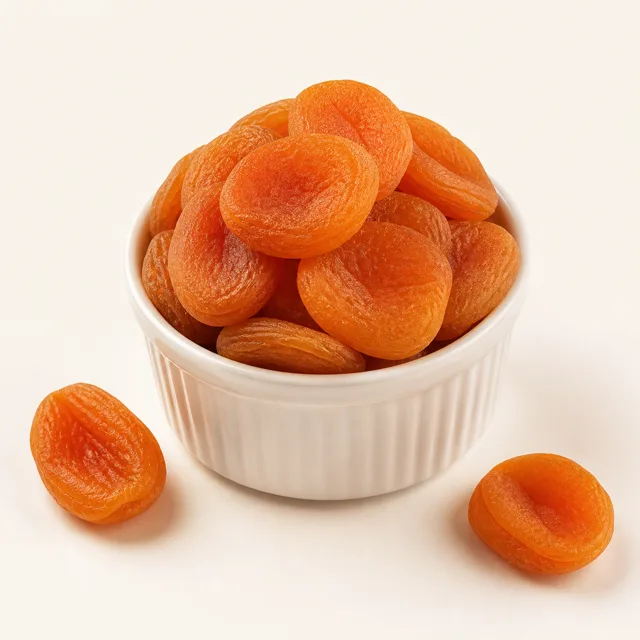
Protein2.9 g
2.9 g
Fat0.5 g
0.5 g
Vitamin D0 µg
0 µg
Omega-30.1 g
0.1 g
Energy239 kcal
239 kcal
Protein+0.5 g
Fat+0.1 g
Vitamin Dequal
Omega-3+0.1 g
Energy−48 kcal
Date, dried
Dried fruit100 g
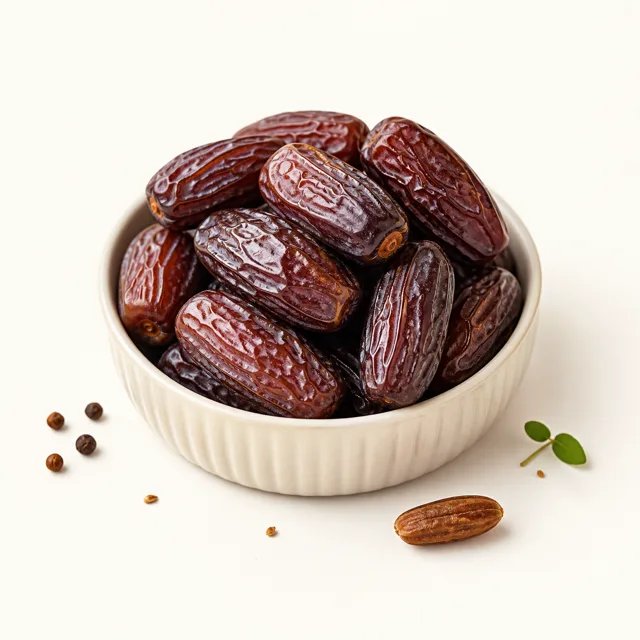
Protein2.4 g
2.4 g
Fat0.4 g
0.4 g
Vitamin D0 µg
0 µg
Omega-30 g
0 g
Energy287 kcal
287 kcal
Highest sugars content
Date, dried contains 30.4 g more sugars per 100 g.
Highest potassium content
Apricot, dried contains 640 mg more potassium per 100 g.
Highest phosphorus content
Apricot, dried contains 42 mg more phosphorus per 100 g.
Full comparison, nutrient by nutrient
Per 100 g. In green: the higher of the two contents. “n/a”: not available in the source.
| Per 100 g | Apricot, dried | Date, dried |
|---|---|---|
| Macronutrients | ||
| Energy | 239 kcal | 287 kcal |
| Protein | 2.9 g | 2.4 g |
| Fat | 0.5 g | 0.4 g |
| of which saturated fat | 0.2 g | 0 g |
| of which polyunsaturated | 0.2 g | 0 g |
| of which omega-3 | 0.1 g | 0 g |
| Carbohydrates | 59.1 g | 64.7 g |
| of which sugars | 34.3 g | 64.7 g |
| Dietary fibre | 8.3 g | 7.5 g |
| Water | 24.7 g | 22.9 g |
| Alcohol | 0 g | 0 g |
| Minerals | ||
| Calcium | 82 mg | 68 mg |
| Iron | 1.4 mg | 2.2 mg |
| Magnesium | 50 mg | 55 mg |
| Phosphorus | 110 mg | 68 mg |
| Potassium | 1,370 mg | 730 mg |
| Sodium | 11 mg | 11 mg |
| Zinc | 0.4 mg | 0.4 mg |
| Vitamins | ||
| Vitamin D | 0 µg | 0 µg |
| Vitamin B12 | 0 µg | 0 µg |
| Vitamin C | 0 mg | 0 mg |
| Folate | 9 µg | 18 µg |
Keep comparing
- Full page: Apricot, dried
- Full page: Date
- Prune, dried or Date, dried: the comparison
- Banana, dried or Date, dried: the comparison
- Pear, dried or Apricot, dried: the comparison
- Date, dried or Pear, dried: the comparison
- Fig, dried or Date, dried: the comparison
- Mango, dried or Date, dried: the comparison
- Adjust this comparison in the tool