
Vergleich
Geflügellyoner vs. Weisswurst: Nährwert-Vergleich
Je 100 g: 205 kcal bei Geflügellyoner, gegenüber 220 kcal bei Weisswurst. Differenz: 15 kcal. Der vollständige Vergleich, Nährstoff für Nährstoff, nach der Datenbank BLV V7.1.
Geflügellyoner
Brühwurstware100 g
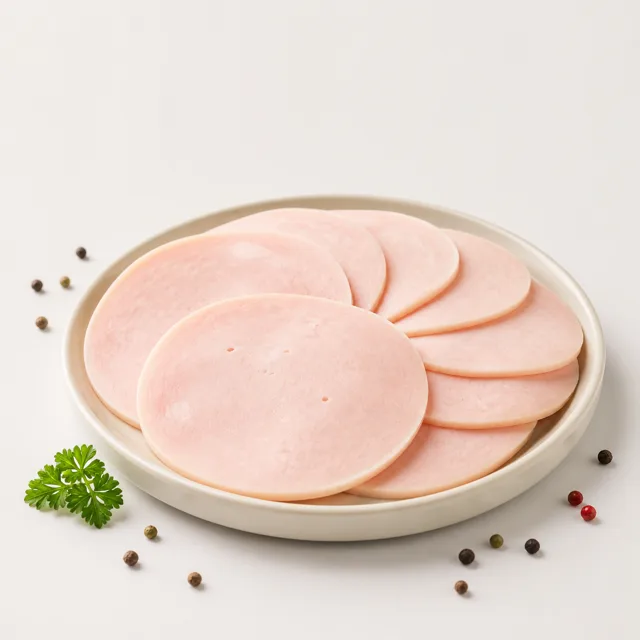
Protein13.5 g
13.5 g
Fett16.4 g
16.4 g
Vitamin D0 µg
0 µg
Omega-30.2 g
0.2 g
Energie205 kcal
205 kcal
Protein+1.7 g
Fett−2.5 g
Vitamin D−0.1 µg
Omega-3+0.1 g
Energie−15 kcal
Weisswurst
Brühwurstware100 g
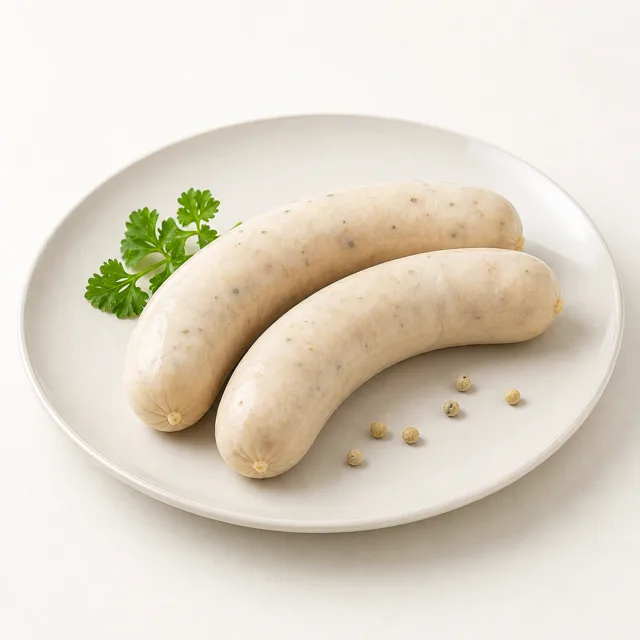
Protein11.8 g
11.8 g
Fett18.9 g
18.9 g
Vitamin D0.1 µg
0.1 µg
Omega-30.1 g
0.1 g
Energie220 kcal
220 kcal
Höchster Gehalt an Vitamin C
Geflügellyoner enthält 35 mg mehr Vitamin C je 100 g.
Höchster Gehalt an Vitamin B12
Geflügellyoner enthält 0.5 µg mehr Vitamin B12 je 100 g.
Höchster Gehalt an Gesättigte Fettsäuren
Weisswurst enthält 2.2 g mehr Gesättigte Fettsäuren je 100 g.
Vollständiger Vergleich, Nährstoff für Nährstoff
Je 100 g. In Grün: der höhere der beiden Gehalte. «n. v.»: in der Quelle nicht verfügbar.
| Je 100 g | Geflügellyoner | Weisswurst |
|---|---|---|
| Makronährstoffe | ||
| Energie | 205 kcal | 220 kcal |
| Protein | 13.5 g | 11.8 g |
| Fett | 16.4 g | 18.9 g |
| davon gesättigte Fettsäuren | 5.1 g | 7.3 g |
| davon mehrfach ungesättigte | 2.3 g | 1.9 g |
| davon Omega-3 | 0.2 g | 0.1 g |
| Kohlenhydrate | 0.9 g | 0.6 g |
| davon Zucker | 0.9 g | 0.6 g |
| Ballaststoffe | 0 g | 0 g |
| Wasser | 65.3 g | 68.6 g |
| Alkohol | 0 g | 0 g |
| Mineralstoffe | ||
| Calcium | 13 mg | 21 mg |
| Eisen | 0.5 mg | 0.7 mg |
| Magnesium | 17 mg | 10 mg |
| Phosphor | 210 mg | 160 mg |
| Kalium | 210 mg | 140 mg |
| Natrium | 920 mg | 810 mg |
| Zink | 1.1 mg | 1.3 mg |
| Vitamine | ||
| Vitamin D | traces | 0.1 µg |
| Vitamin B12 | 0.9 µg | 0.4 µg |
| Vitamin C | 36 mg | 1 mg |
| Folat | n. v. | 3 µg |
Weitere Vergleiche
- Vollständige Seite: Geflügellyoner
- Vollständige Seite: Weisswurst
- Geflügellyoner oder Kalbsbratwurst, gebraten (ohne Zusatz von Fett und Salz): der Vergleich
- Wienerli, gekocht oder Geflügellyoner: der Vergleich
- Weisswurst oder St. Galler Schüblig: der Vergleich
- Weisswurst oder Lyoner: der Vergleich
- Wienerli, gekocht oder Weisswurst: der Vergleich
- Geflügellyoner oder Wienerli: der Vergleich
- Diesen Vergleich im Vergleichstool anpassen